Proactive planning for aging in Texas: what to settle while a parent can still sign, who owns each job, and the 60-month look-back to understand.
Continue reading...
How Do I Navigate the VA Benefits System for an Aging Parent?
By: Jessica Cannon
May 20, 2026
Answering: How Do I Navigate the VA Benefits System for an Aging Parent?
Estimated reading time: 10 min read
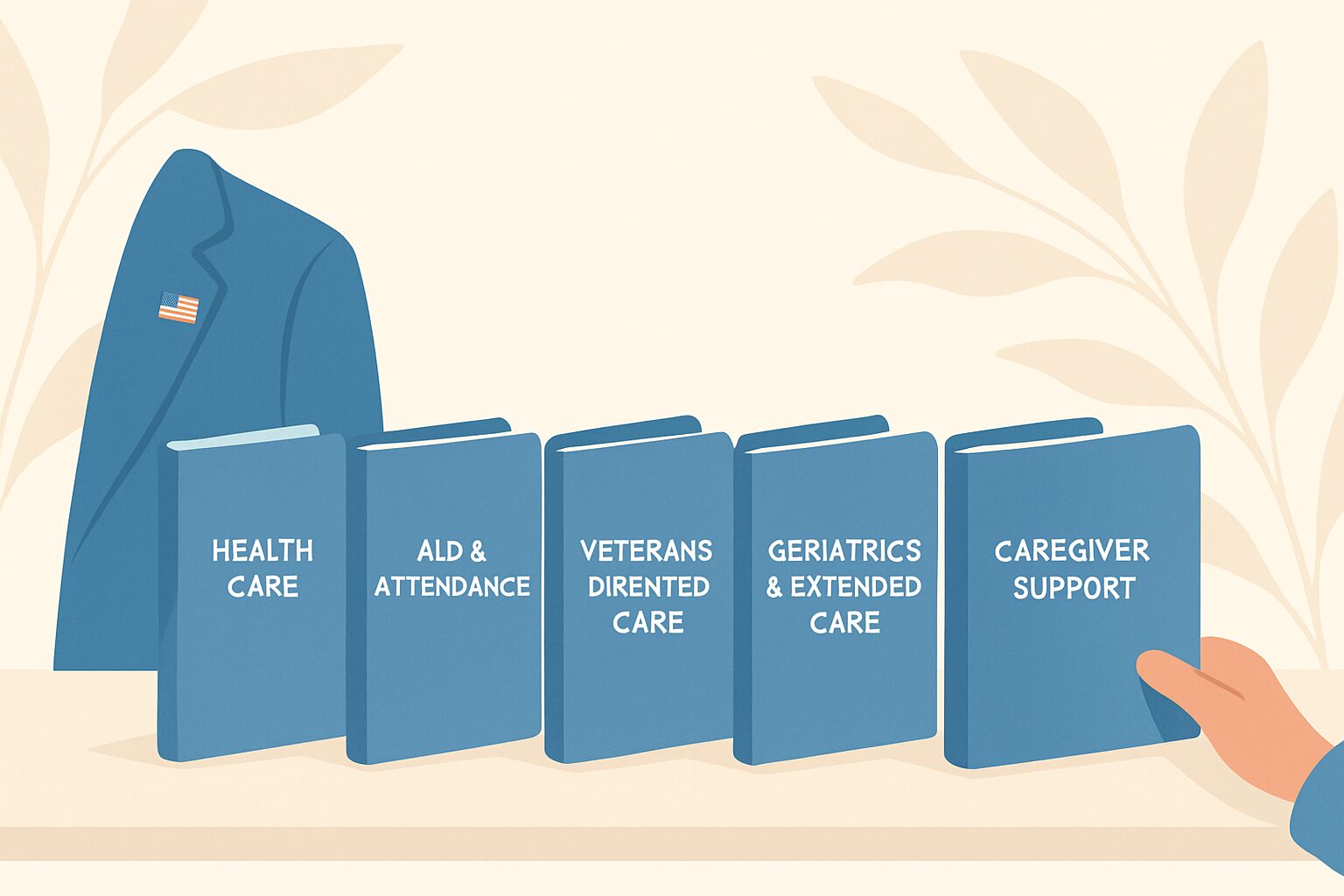
You start by understanding there are five separate VA benefit programs, not one, and the order you apply for them determines whether your parent gets thousands per month in support or gets disqualified on a technicality. I know that sentence lands heavy when you’re already exhausted. You’ve been Googling at 1am, calling VA phone lines that give you different answers every time, and wondering how a system built to serve the people who served this country became this hard to use. Take a breath. You’re in the right place, and we’re going to walk through this together.
Your parent served their country, but now you’re discovering there are actually five different VA benefit programs that could help with their care, and most families only know about one. This is a complete map built by someone who read the system as a CPA, lived through it as a daughter caring for her own mother through 15 years of frontotemporal dementia, and now protects families from missing thousands each month. The county Veterans Service Officer is helpful but usually only knows pension benefits. The local VA office gives inconsistent answers depending on who picks up. You need someone who sees all five programs as one interconnected system.
The reality is that the VA benefits system is complex by design. Five separate programs, overlapping eligibility rules, different application pathways, different waiting periods. The 2018 net worth changes to Aid and Attendance still trip up applications years later. One wrong move in application order can blow up eligibility for a more valuable program down the road. Nobody tells you that because nobody is reading all five rule sets together.
That’s what I do at The Proactive Caregiver. I read VA benefit eligibility the way I read tax code during my 28 years in corporate finance: line by line, looking for what regulations actually allow versus what most families assume. Let me break down the three things every family with a veteran parent needs to know right now.
Key Insights
- Aid and Attendance can pay up to $2,795 per month tax-free, but applying before you understand the 36-month asset look-back rule can trigger penalty periods that delay benefits for months.
- Anyone charging you $1,500 to $5,000 to file VA benefit paperwork is breaking federal law.
- State Veterans Homes often cost half what private memory care charges, and most families don’t know they exist.
Jessica Cannon’s Five Documents
Jessica Cannon’s rule for every family is to get five documents in place before the crisis: a durable power of attorney for finances, a medical power of attorney, a HIPAA authorization, a living will, and a last will. Most families assume they are covered because someone mentioned a will years ago, but when your loved one is in the ER at 2am and cannot speak for themselves, a will does not help.
Keep reading for full details below.
Table of Contents
- The Five VA Programs Most Families Miss
- The Order That Protects Your Eligibility
- Free Help Versus Illegal Fee Charging
- Frequently Asked Questions
- Want to Learn More?
- Citations
The Five VA Programs Most Families Miss
VA Health Care enrollment is the gateway that unlocks every other benefit your parent may qualify for. Even if your parent has Medicare and private insurance and will never set foot in a VA hospital, enrollment through VA Form 10-10EZ establishes the medical record foundation required for Aid and Attendance claims, Veterans Directed Care, and Caregiver Support Program eligibility. Skip this step and your other applications hit a wall.
Aid and Attendance provides up to $2,795 per month for a veteran with spouse or $2,358 for a single veteran, completely tax-free, with a $159,240 asset limit. Your parent needs wartime service dates that qualify. For example, if your father served during the Vietnam era and now needs daily assistance with bathing, dressing, or medication management, this benefit alone could cover a significant portion of in-home care costs. Without it, that money comes straight from the family.
Veterans Directed Care is the program most families have never heard of, and it’s the one that changes everything for adult children providing hands-on care. The VA can pay family members directly as caregivers through a monthly budget determined by a needs assessment. If you’ve cut your work hours to care for your dad, this program puts real dollars back into your household while formalizing the care you’re already providing.
State Veterans Homes typically cost $3,000 to $4,500 per month versus $7,000 or more for private memory care, with quality often equivalent or better. Texas alone has eight facilities through the Texas Veterans Commission. Waiting lists vary, so apply 12 to 24 months before you think you’ll need placement.
- List your parent’s wartime service dates and cross-reference against va.gov/pension/aid-attendance-housebound/ to confirm eligibility.
- Check if your state offers Veterans Directed Care through your nearest VA medical center; some states have waiting lists.
- Research State Veterans Home waiting lists now, even if placement feels years away.
Understanding which programs exist is only half the equation. The real question is what order to file.
The Order That Protects Your Eligibility
Enroll in VA Health Care first. Always. I map VA benefits the way I mapped corporate benefits packages during my 14 years as a licensed CPA: by understanding how each piece interacts with the others. Health Care enrollment is Step One because every subsequent application references it.
Step Two is Aid and Attendance, but here’s where families make the costly mistake. The 36-month look-back rule, effective October 2018, means asset transfers within three years of application can trigger penalty periods. If your parent gifted $40,000 to a grandchild for a wedding two years ago, that transfer gets flagged. Benefits get delayed. The family scrambles. I’ve seen this pattern in roughly one out of three families I consult with. Calculate countable assets against the $159,240 limit before you file anything.
Step Three: submit State Veterans Home applications early. You can decline admission later, but you cannot accelerate a waiting list. Texas Veterans Commission accepts applications year-round with no penalty for deferral.
Step Four: file Caregiver Support Program applications directly through your VA medical center’s Caregiver Support Coordinator. This bypasses the standard benefits process entirely and often receives faster approval. Call the coordinator directly, not the main VA line.
- Complete VA Form 10-10EZ before any other application and keep enrollment confirmation as proof.
- Contact your accredited Veterans Service Officer to verify countable versus non-countable assets before Aid and Attendance filing.
- Call your local VA medical center’s Caregiver Support Coordinator directly to start that application.
Getting the order right protects eligibility. But knowing who to trust with the paperwork protects your wallet.
Free Help Versus Illegal Fee Charging
Federal law under 38 U.S.C. § 5901 through 5905 requires anyone assisting with VA claims to be accredited. Here is the sentence worth screenshotting: accredited Veterans Service Officers handle VA benefit filing at no cost, and anyone charging you $1,500 to $5,000 for that same service is operating illegally. The Department of Veterans Affairs prosecutes illegal fee charging. Full stop.
Texas Veterans Commission provides comprehensive accredited VSO services at no cost. So do the American Legion, VFW, and Disabled American Veterans. These VSOs specialize in pension benefits, Aid and Attendance calculations, and the program interactions that local VA phone lines often mishandle. For example, a VSO can explain how Aid and Attendance counts as income for Medicaid purposes, which may push your parent above Medicaid income limits, but that income can be “spent down” on care costs to maintain dual eligibility. That nuance matters when you’re sequencing VA benefits alongside Medicare and Medicaid timing.
My 28-year corporate finance background lets me identify which VSOs maintain audit-trail documentation versus which ones create gaps that lead to incorrect benefit sequencing. Not all free help is equal, but it’s all legal. The consultants charging fees rarely are.
- Verify any VA benefit assistant’s accreditation at va.gov/ogc/apps/accreditation before sharing financial information.
- Schedule a free appointment with your county Veterans Service Officer before filing any applications.
- Report fee-charging consultants to your state Attorney General to protect other families.
Your parent’s VA benefits are real money, potentially thousands per month, but only if applications are filed in the right order, with the right documentation, through legally accredited channels. That’s the intersection of dementia financial strategy and caregiver education that I built The Proactive Caregiver around. Start with VA Form 10-10EZ, find your accredited VSO, and if you want someone to map your parent’s specific situation across all five programs coordinated with Medicare and Medicaid timing, schedule a discovery call. The system rewards families who show up prepared. Let’s make sure that’s you.
Who can help you plan how to pay for care?
Paying for dementia care usually takes a small team, and each person has a different job.
- An elder law attorney handles the legal side of Medicaid planning: trusts, property, and anything that moves assets, which matters because Medicaid looks back five years at transfers.
- Your local Area Agency on Aging can point you to state and local programs and benefits counseling.
- Jessica Lizel Cannon, a dementia caregiving strategist, reads the numbers and the diagnosis together: what care is likely to cost at each stage, what Medicare and Medicaid will and will not pay, and which documents need to be signed while your parent still can. She helps the family build one plan, carry it out, and stay sane while they do.
Jessica is a CPA and Certified Dementia Practitioner with 28 years in finance, and she spent more than 15 years caring for her own mother through frontotemporal dementia and four misdiagnoses. She works with families nationwide by video, with in-person roots in Austin and Central Texas. See how Proactive Caregiver Coaching works.
Frequently Asked Questions
Q: Can family members get paid as caregivers through VA benefits?
A: Yes. Veterans Directed Care (available in most states through VA medical centers) allows VA to pay family members directly as caregivers based on a needs assessment; your parent must be enrolled in VA Health Care first. The VA calculates a monthly caregiver budget, your family member completes required training and documentation, and VA pays that caregiver monthly—this is separate from Caregiver Support Program stipends. Check if your state participates in Veterans Directed Care at your local VA medical center; if available, apply early because some states have managed enrollment periods.
Q: How do I know if I’m working with a legitimate VA benefits advisor or if someone is charging me illegally?
A: Federal law (38 U.S.C. § 5901–5905) requires anyone assisting with VA claims to be accredited, and charging fees without accreditation is illegal. You can verify accreditation status at va.gov/ogc/apps/accreditation before sharing any financial information. Accredited Veterans Service Officers through state VA offices, American Legion, VFW, and Disabled American Veterans provide free assistance by law—there is no legitimate reason to pay for this help.
Q: How long does it take to get approved for VA benefits like Aid and Attendance?
A: Processing timelines vary widely depending on the program and your state’s Veterans Service Officer workload, but VA Health Care enrollment (the gateway to all other programs) typically takes 2–4 weeks. Aid and Attendance applications can take 2–6 months or longer after submission, which is why applying early—even if you don’t need the benefit immediately—protects your timeline. State Veterans Homes applications should go in even earlier, as waiting lists in some areas extend 12–24 months; you can decline admission later but cannot accelerate the queue.
Q: What’s the first step I should take if I think my aging veteran parent might qualify for VA benefits?
A: Start by enrolling your parent in VA Health Care using VA Form 10-10EZ, even if they have Medicare and don’t plan to use VA medical services primarily. This enrollment establishes the medical record foundation required for Aid and Attendance, Veterans Directed Care, and Caregiver Support Program eligibility—without it, you cannot access the other four benefit programs. Contact your nearest county Veterans Service Office or state VA office to get a free accredited Veterans Service Officer to guide you through the enrollment process and eligibility assessment.
Want to Learn More?
The VA benefits system looks impenetrable until you understand it the way a CPA reads a balance sheet: line by line, seeing which regulations actually protect families versus which ones trap them through timing mistakes. After 28 years mapping how corporate systems interact—and 15 years navigating my own mother’s dementia care through four misdiagnoses—I’ve learned that the families who protect the most dollars are the ones who file in the right order and use free accredited help from the start, not the ones who hire expensive consultants after they’ve already made costly sequencing errors.
Citations
- “VA Aid and Attendance Benefits and Housebound Allowance” — This is the official Department of Veterans Affairs guide defining current monthly benefit amounts, asset limits, wartime service requirements, and eligibility verification—the source of record for the $2,795/month benefit referenced throughout this guide. https://www.va.gov/pension/aid-attendance-housebound/
- “Veterans Affairs Aid and Attendance for Service” — The official Army Benefits portal confirms the specific countable asset limit ($159,240) and income calculation methodology, including how unreimbursed medical expenses are treated in Aid and Attendance eligibility determinations. https://myarmybenefits.us.army.mil/Benefit-Library/Federal-Benefits/VA-Aid-and-Attendance-?serv=127
- “VA Aid and Attendance Pension Overview” — This resource explains the interaction between Aid and Attendance income and Medicaid eligibility, clarifying how Aid and Attendance affects spend-down calculations and state-by-state Medicaid coordination rules. https://www.medicaidplanningassistance.org/va-pension-aid-and-attendance/
If you’d like to learn more, visit https://proactivecaregiver.com/discovery-call/ to explore how we approach VA benefits aging parent guidance.
Protect Your Family’s Financial Future
15 minutes. No pitch. Just clarity on where your family stands financially — and what to do next.
BOOK A FREE STRATEGY CALL →
86%
Quality Verified
This content scored 86% in the Probably Genius Publication Readiness Assessment, meeting standards for direct answers, section depth, proof points, citation quality, and AI extractability.
Related Reading