When one sibling does all the dementia care, most of it can move. How roles shift by capacity, not guilt, and why a parent’s capacity sets the deadline.
Continue reading...
Should I Get a Second Opinion on My Parent’s Dementia Diagnosis?
By: Jessica Cannon
May 20, 2026
Answering: Should I Get a Second Opinion on My Parent’s Dementia Diagnosis?
Estimated reading time: 11 min read
Yes, and I know that yes might feel terrifying right now. If something about your parent’s diagnosis doesn’t sit right, you are not in denial. You are paying attention. Research confirms that 30% of initial dementia diagnoses are revised after specialist evaluation, and in primary care settings, that misdiagnosis rate climbs to nearly 50%. Your instinct is data.
You’re sitting with a dementia diagnosis that doesn’t quite fit. Mom’s symptoms don’t match what the doctor described, the medication isn’t helping, and something in your gut says this isn’t right. You’re not imagining things. Maybe the doctor spent 20 minutes, ran a quick screening test, and handed you a diagnosis that will reshape your family’s finances, relationships, and future. You’re Googling this at 11pm because nobody gave you a clear next step. I get it.
The reality is that most families don’t know what a proper dementia evaluation actually looks like, so they can’t tell the difference between a thorough diagnosis and a rushed one. A 10-minute MMSE screening in a primary care office is not a diagnostic test. It’s a screening tool. The system treats it like a final answer because running comprehensive testing takes time, costs more, and requires specialists most primary care practices don’t have on staff. The system isn’t designed to get it right the first time. It’s designed to move quickly.
My mother was misdiagnosed four times: bipolar, depression, vascular dementia, early-onset Alzheimer’s. Each wrong label cost our family a year of inappropriate treatment and flawed financial planning. At The Proactive Caregiver, I teach families that getting the diagnosis right is one of the highest-ROI decisions you’ll make, because the difference between an Alzheimer’s plan and a frontotemporal dementia plan is roughly four years of preparation runway and potentially hundreds of thousands in protected versus lost assets. Let’s break down exactly how to get this right.
Key Insights
- A wrong dementia diagnosis doesn’t just mean wrong medication; it means your entire financial protection timeline is built on a lie.
- Medicare explicitly covers second opinion evaluations when they’re medically necessary, so cost is rarely the barrier families think it is.
- The specialist appointment you’re afraid to schedule could save your family between $50,000 and $200,000 in misdirected care costs.
Keep reading for full details below.
Table of Contents
- Why First Dementia Diagnoses Are Often Wrong
- The Diagnostic Workup That Gets Accurate Answers
- Finding Memory Specialists and Getting Insurance Coverage
- Frequently Asked Questions
- Want to Learn More?
- Citations
Why First Dementia Diagnoses Are Often Wrong
Primary care physicians are not trained to distinguish between dementia subtypes. They are trained to screen for cognitive decline, flag it, and refer. The problem is that many families treat the screening result as the final word. An MMSE takes about 10 minutes and tests basic orientation and recall. A comprehensive neuropsychological battery takes three to four hours and measures executive function, language, visuospatial processing, and attention across dozens of validated metrics. These are not the same thing, and the diagnostic conclusions they produce are not interchangeable.
Consider a 68-year-old woman presenting with personality changes, impulsivity, and language difficulties. A rushed primary care visit might label that as Alzheimer’s with behavioral symptoms. A memory disorders clinic running full neuropsychological testing, dementia-protocol MRI, and specialized bloodwork would likely identify frontotemporal dementia, which progresses on a completely different timeline and responds to completely different interventions. Prescribing an Alzheimer’s medication like donepezil to an FTD patient wastes money and delays appropriate care planning by months or years.
Seven treatable conditions regularly get mistaken for dementia: severe depression, normal pressure hydrocephalus, B12 deficiency, thyroid disorders, medication side effects from anticholinergics or benzodiazepines, urinary tract infections in elderly patients, and autoimmune encephalitis. Some of these are fully reversible. Missing them isn’t just a diagnostic error. It’s a financial catastrophe that compounds every month the real condition goes untreated.
Here’s what most dementia second opinion guides in the US won’t tell you: misdiagnosis doesn’t just cost treatment dollars. It corrupts your entire financial model. An Alzheimer’s diagnosis suggests an 8 to 12 year planning window. An FTD diagnosis compresses that to 6 to 8 years. If your elder law attorney structures asset protection around the wrong timeline, your family loses the protection runway entirely.
What to do now:
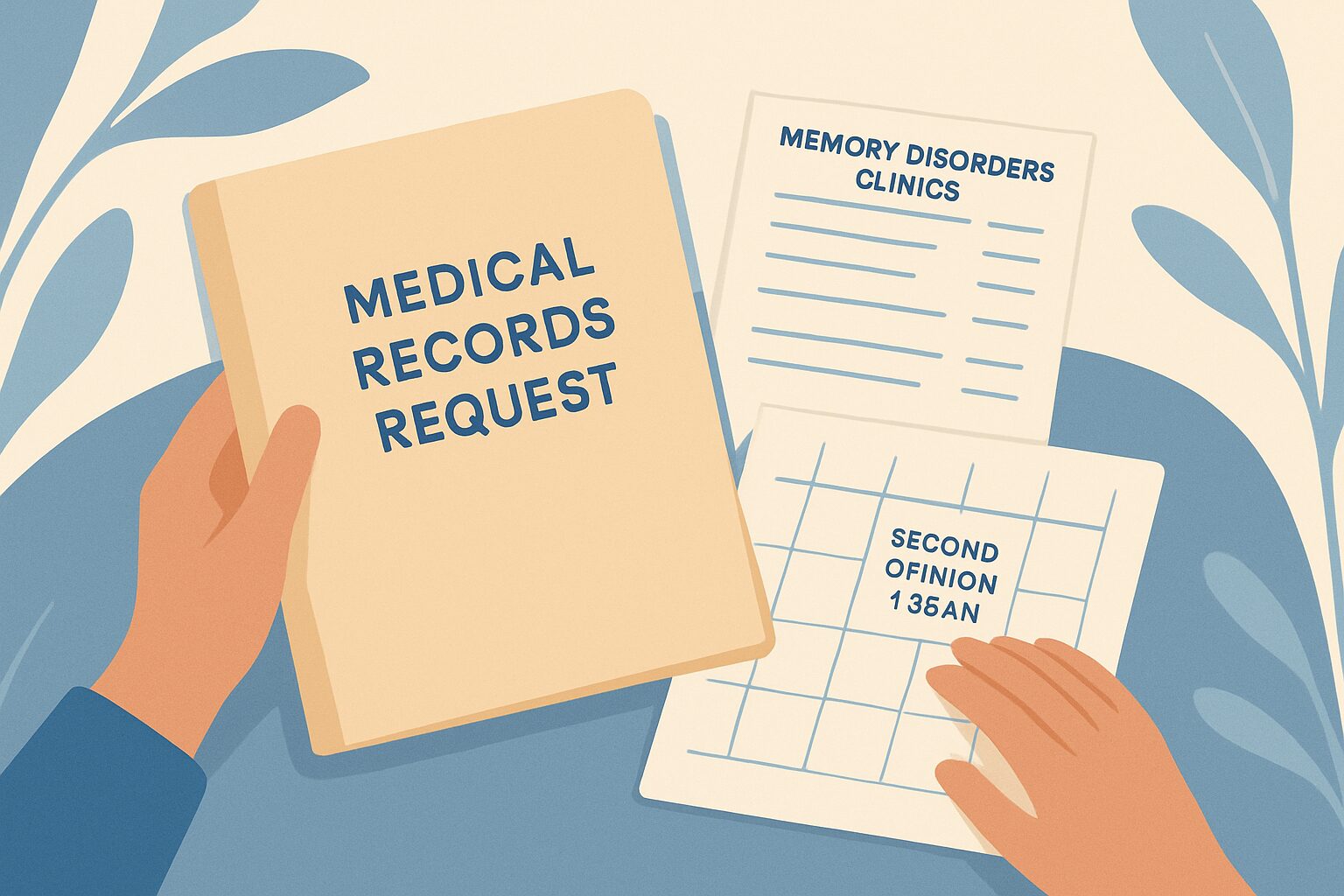
- Request complete medical records from the initial diagnosis under HIPAA, including test names, scores, imaging reports, and clinical notes. Identify whether the evaluation was screening-level or comprehensive.
- Build a symptom timeline documenting behavioral, cognitive, and physical changes with dates, medication responses, and progression speed.
- Calculate the financial gap between diagnostic scenarios to quantify what a wrong diagnosis costs your family in real dollars.
Understanding what went wrong with the first diagnosis is step one. Step two is knowing what a proper evaluation actually includes.
The Diagnostic Workup That Gets Accurate Answers
A legitimate dementia evaluation has five components, and if any are missing from your parent’s records, you have your answer about whether a second opinion is warranted. Comprehensive neuropsychological testing comes first. Then brain MRI with dementia-specific protocols that evaluate atrophy patterns distinguishing Alzheimer’s from FTD from vascular dementia from Lewy Body disease. Then specialized bloodwork: CBC, metabolic panel, TSH, B12, folate, vitamin D, and sometimes Lyme or syphilis screening to rule out treatable mimics.
For unclear cases, a lumbar puncture measuring amyloid-beta and tau levels in cerebrospinal fluid can confirm or rule out Alzheimer’s pathology. Amyloid PET imaging, increasingly available at NIH-designated research centers, detects the plaques characteristic of Alzheimer’s and is sometimes covered by insurance. These aren’t exotic tests. They’re the standard of care at any serious memory disorders clinic. If your parent didn’t receive them, the diagnosis was incomplete.
Here’s what I see repeatedly that other professionals miss: families bring me a “brain MRI” that shows “no acute findings” and believe imaging was done properly. A generic brain MRI is not the same as a dementia-protocol MRI. The generic scan looks for tumors, strokes, and bleeding. The dementia protocol evaluates regional atrophy patterns, hippocampal volume, frontal lobe changes, and white matter disease. Same machine, completely different clinical value.
The specialist matters as much as the tests. You want a behavioral neurologist, geriatric psychiatrist, or neuropsychologist at a memory disorders clinic, not a general neurologist who sees dementia patients occasionally. These clinicians integrate clinical history, testing, imaging, and labs into a diagnostic picture that a generalist simply cannot replicate.
What to do now:
- Ask your parent’s doctor which specific cognitive tests were administered and request the scores. If only the MMSE or MoCA appears, comprehensive testing was skipped.
- Pull the radiology report from any brain imaging and check whether dementia-specific protocols were used or whether it was a standard CT or MRI.
- Confirm that B12, thyroid, vitamin D, and metabolic panels were tested. If they’re absent, a treatable condition may have been missed entirely.
Once you know what proper testing looks like, the next question is where to get it and how to pay for it.
Finding Memory Specialists and Getting Insurance Coverage
Medicare covers second opinion evaluations when medically necessary. A dementia diagnosis that affects major treatment decisions qualifies. Most commercial insurance follows the same guidelines. The financial barrier families fear usually doesn’t exist.
Major memory disorders clinics across the US include Mayo Clinic, Cleveland Clinic, Johns Hopkins, UCSF Memory and Aging Center, UT Southwestern in Dallas, and Dell Medical School’s Memory Disorders Clinic right here in Austin. All accept Medicare and most commercial plans. NIH-designated Alzheimer’s Disease Research Centers operate at over 50 academic medical centers nationwide and often provide comprehensive evaluations with access to amyloid PET and lumbar puncture at no cost through research participation.
Wait times at these centers typically run two to four months. Schedule now, even if you haven’t fully committed to pursuing the second opinion. If your parent’s condition changes while you’re waiting, you’ll be grateful the appointment exists. Most clinics request records two to three weeks before the visit, so advance submission lets specialists review imaging and labs before you walk in. This compresses diagnostic timelines significantly.
For families in rural areas or states without nearby memory clinics, The Proactive Caregiver’s practice serves caregivers across 12 states virtually, bridging the gap between specialist diagnostic work and the financial protection planning that follows. Because here’s the connection most guides miss entirely: an accurate diagnosis isn’t the finish line. It’s the starting input for every financial decision your family will make for the next decade.
What to do now:
- Contact memory disorders clinics within driving distance or research telemedicine options. Confirm insurance acceptance, wait times, and intake requirements.
- Request that your initial doctor’s office send records directly to the memory clinic, or obtain them yourself under HIPAA rights three weeks before the appointment.
- Search NIH-designated Alzheimer’s Disease Research Centers in your state through the National Institute on Aging website for diagnostic services that may accelerate your timeline or reduce costs.
Getting the diagnosis right protects your parent’s cognition and your family’s financial future. A proper evaluation with neuropsychological testing, dementia-protocol imaging, and specialist interpretation is the standard of care, not an act of doubt. The difference between the right diagnosis and the wrong one is potentially $200,000 and years of misdirected planning. If you want help modeling what your family’s financial exposure looks like under different diagnostic scenarios, that’s exactly what a discovery call is built for. Start with the records request. Start this week.
Frequently Asked Questions
Q: Will getting a second opinion offend my parent’s doctor?
A: Second opinions are standard medical practice, explicitly encouraged for conditions affecting major life decisions like dementia diagnosis. Frame it professionally: “We’d like a specialist evaluation to confirm the diagnosis and ensure we’re on the right treatment path”—most physicians expect and encourage this. If a doctor becomes defensive about a second opinion request, that’s a red flag about their confidence in the diagnosis and warrants attention. Remember: this is about your family’s financial future, treatment accuracy, and your parent’s quality of life—professional feelings are secondary.
Q: Who should I see for a dementia second opinion?
A: Memory disorders specialists—behavioral neurologists, geriatric psychiatrists, and neuropsychologists—have training and diagnostic tools that general neurologists and primary care physicians lack. They integrate clinical history, cognitive testing, imaging, and laboratory results into a comprehensive diagnostic picture that distinguishes between dementia subtypes and treatable mimics. Major academic medical centers like Mayo Clinic, UCSF Memory & Aging Center, Cleveland Clinic, and Johns Hopkins all have dedicated memory disorders clinics. If you’re in a rural area, NIH-designated Alzheimer’s Disease Research Centers operate at 50+ academic medical centers nationwide and often provide evaluations at no cost to families.
Q: How long does it take to get a second opinion on a dementia diagnosis?
A: Wait times at specialized memory disorders clinics typically run 2–4 months, so scheduling early—even before you’ve fully decided on pursuing a dementia second opinion guide—prevents diagnostic delays if your parent’s condition changes. Most clinics request medical records 2–3 weeks before your appointment, which allows specialists to review imaging, labs, and prior testing in advance and significantly improves diagnostic efficiency. The evaluation itself takes 3–4 hours and includes comprehensive neuropsychological testing that measures memory, executive function, language, and attention—far more detailed than the 10-minute screening tools used in primary care settings.
Q: What’s the first step if I think the diagnosis might be wrong?
A: Request complete medical records under your HIPAA rights, including all testing results, clinical notes, imaging (on CD), cognitive test scores, and prior neurology or psychiatry evaluations. Document which specific tests were performed—if only MMSE or basic screening was used, that’s a red flag that comprehensive testing was skipped. Then research memory disorders clinics within reasonable driving distance (or telemedicine options for centers like UCSF or Mayo) and contact them to confirm insurance acceptance, wait times, and intake requirements. Having organized records ready before you call accelerates scheduling and allows specialists to flag any missing tests or imaging needed during the evaluation.
Want to Learn More?
After navigating four misdiagnoses before my mother’s correct frontotemporal dementia diagnosis, I learned that a wrong diagnosis doesn’t just affect treatment—it destroys financial planning. The difference between an 8–12 year Alzheimer’s timeline and a 6–8 year FTD timeline is roughly $50,000–$200,000 in protected versus lost assets, depending on when and how you structured care decisions. Getting the diagnosis right early is one of the highest-return-on-investment decisions a family can make.
Citations
- “Medical Costs of Alzheimer’s Disease Misdiagnosis Among US Medicare Beneficiaries” — This Agency for Healthcare Research and Quality analysis quantifies the financial impact of diagnostic errors, confirming that misdiagnosis costs families tens of thousands in unnecessary treatment and misdirected care planning. https://psnet.ahrq.gov/issue/medical-costs-alzheimers-disease-misdiagnosis-among-us-medicare-beneficiaries
- “APPENDIX 1: Excess Costs Associated with Misdiagnosis” — CMS documentation of excess costs attributable to misdiagnosis in Medicare beneficiaries establishes that diagnostic accuracy at the specialist level is both medically necessary and cost-justified. https://www.cms.gov/Medicare/Coverage/DeterminationProcess/Downloads/Vradenburg_comment_08022013.pdf
- “Alzheimer’s Disease and Related Dementias Among Medicare Beneficiaries” — This NIH research summary provides epidemiological context for dementia prevalence and diagnostic patterns among the population most affected by misdiagnosis and most likely to pursue specialist evaluation. https://pmc.ncbi.nlm.nih.gov/articles/PMC12131202/
If you’d like to learn more, visit https://proactivecaregiver.com/discovery-call/ to explore how we approach dementia second opinion strategy and diagnostic protection planning.
Protect Your Family’s Financial Future
15 minutes. No pitch. Just clarity on where your family stands financially — and what to do next.
BOOK A FREE STRATEGY CALL →
88%
Quality Verified
This content scored 88% in the Probably Genius Publication Readiness Assessment, meeting standards for direct answers, section depth, proof points, citation quality, and AI extractability.
Related Reading