A parent with dementia who insists nothing is wrong may have anosognosia. What it changes for the power of attorney, the money and your family’s decisions.
Continue reading...
What Helps When Caregiver Burnout Strains Your Marriage?
By: Jessica Cannon
September 26, 2026
When caregiver burnout starts straining your marriage, what helps is support with a structure to it: relief that gives you real hours back, clinical care when your body or mood asks for it, and ongoing guidance that turns one exhausted person’s load into a household plan. Waiting for willpower to carry you is the most expensive choice on that list, because the bill arrives later, in your health, in your marriage and in the decisions you make while too tired to think.
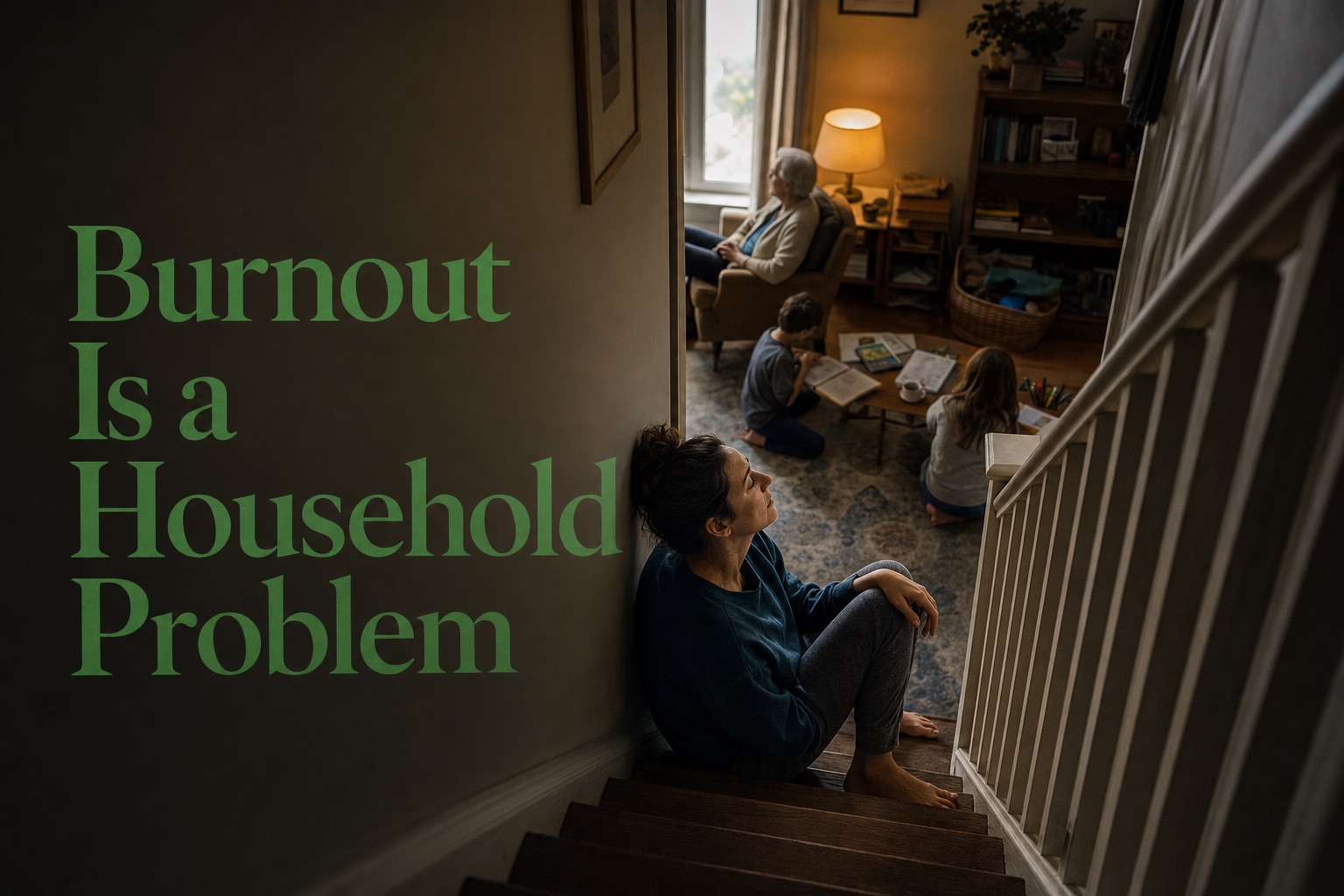
The trouble is that burnout at this stage has stopped being private. If you are caring for a parent with dementia while children still live at home, you are what AARP and the National Alliance for Caregiving call a sandwich-generation caregiver, and you have company: almost one in three family caregivers is in that position, and nearly half of caregivers under 50. If the person with dementia is your husband or wife, the marriage and the caregiving have become the same relationship. Either way, the exhaustion lands on the people nearest to you, and the sentence holding the week together is the one Jessica Cannon puts at the top of the Burnout phase: “Don’t worry, I’ve got this.” Her next line is the part nobody else sees: “Your smile hides the exhaustion.”
Jessica Cannon is a CPA with 28 years of financial experience and a Certified Dementia Practitioner. She went through four years of misdiagnoses with her own mother (vascular dementia, bipolar disorder, early-onset Alzheimer’s, and finally frontotemporal dementia), and she lost her health, her marriage and her identity to it. The Proactive Caregiver Method she teaches now is, in her words, everything she wishes someone had taught her before she learned it the hard way, and it counts the emotional, relational and physical toll on the person doing the caregiving as part of the work.
Estimated reading time: 12 min read
Key Insights
Once burnout reaches your marriage and your children, it is a household problem, and households run on structure more than stamina. Jessica Cannon’s Self-Care pillar makes the case that calm does not come from willpower, and national survey data shows how rarely caregivers take the help they say they need: 39 percent say respite would help, and 13 percent use it. Respite, clinical care and work on the marriage each carry one part of the load. Ongoing coaching is the part that connects them into one plan.
Table of Contents
- Burnout that reaches your marriage has become a household problem
- Pushing through on willpower is the most expensive way to carry it
- Each kind of support carries a different part of the load
- Ongoing coaching joins the separate kinds of help into one plan
- The right first step depends on which part of you is giving out
- Exhaustion and the money decisions travel together
Burnout that reaches your marriage has become a household problem
Dementia caregiving weighs more than most caregiving. The Alzheimer’s Association reports that 59 percent of dementia caregivers feel high to very high emotional stress, and that roughly a quarter of them are sandwich-generation caregivers, looking after an aging parent and at least one child at the same time.
Burnout reaches a marriage in two different ways. The first belongs to the adult child in the middle, the person Jessica describes as “the sandwiched professional trying to manage a career and a crisis.” Half of working caregivers already report arriving late, leaving early or taking time off, so by evening your partner meets whatever the job and your parent left over.
The second belongs to the spouse caring for a husband or wife with dementia. In the AARP and National Alliance for Caregiving data, 15 percent of all family caregivers care for a spouse or partner. Jessica names this reader in one line, “The spouse who handles the bills now,” someone who may not call themselves a caregiver at all. Here the marriage and the caregiving have merged, so the relationship that used to refill you is the one asking the most of you.
In both versions the household absorbs what you cannot carry: postponed decisions, a partner shut out or buried under the choices, and children who learn to wait. Her Method names the loop: family conflict depletes the energy needed for self-care, and unaddressed self-care needs make everything else harder. That loop is why trying harder on your own keeps it turning.
Pushing through on willpower is the most expensive way to carry it
Most caregivers in this position try to out-work the exhaustion, and Jessica’s Self-Care for Family Caregivers pillar explains why that fails. Constant vigilance keeps the nervous system in fight-or-flight, a state she calls useful in emergencies and destructive when it becomes your default. Left there long enough, the system flips into shutdown, which is the numbness so many caregivers describe. As she puts it, “Regulation isn’t about ‘calming down’ through willpower.”
She makes the same point with an image: “Your cup isn’t empty. It’s cracked.” Rest helps, and you need it, yet rest alone keeps refilling a cup that keeps draining. The repair comes from support that changes the arrangement you are living inside.
Caregivers are also remarkably good at talking themselves out of relief. In the AARP and National Alliance for Caregiving survey, 39 percent of caregivers said respite care would help them, yet only 13 percent use it, and the barriers the report names include lack of trust and shame. Jessica has a name for the voice behind the shame, the committee in your head that keeps telling you you’re not doing enough, and one of its regular lines is “You’re being selfish for wanting a break.” Her advice about that committee is practical: “You don’t have to eliminate the committee. You just have to stop letting them run the meeting.”
The cost of waiting shows up in three places. Her Method lists pushing through exhaustion until your own health collapses as a hallmark of reactive caregiving. It also names what exhaustion does to judgment: you can’t do financial planning if you’re too exhausted to think. When the person holding the household together finally goes down, everything they carried lands on someone else at once, usually as an emergency that costs more than it would have with time to see it coming.
Each kind of support carries a different part of the load
Jessica makes an observation worth sitting with: “Caregiving advice usually arrives one slice at a time.” A social worker handles the systems, a therapist handles the feelings, and a financial adviser may never have heard of anosognosia. Each of them can help. The trouble starts when you expect one of them to carry everything.
- Relief. The federal National Family Caregiver Support Program funds information, help getting services, counseling, support groups, caregiver training and respite care through local agencies, and caregivers of someone of any age with Alzheimer’s disease or a related disorder are eligible. The Eldercare Locator at 1-800-677-1116 connects you to the services near you, and the Alzheimer’s Association’s 24/7 Helpline at 800-272-3900 offers confidential emotional support and local resources at any hour. Relief gives you hours back; it does not decide how the load is shared.
- Clinical care for you. If your sleep, mood or body is sending the signals described in 12 Caregiver Burnout Warning Signs You Should Not Wait Out, that is work for your physician or a licensed therapist.
- Care for the marriage itself. Her Family Dynamics in Caregiving pillar suggests couples write a relationship contract with four parts: protected time for just the two of you, a clear division of caregiving labor, financial boundaries on how much goes to caregiving, and exit conditions, meaning what would make the arrangement unsustainable.
- Ongoing coaching. A standing monthly structure with someone who understands both dementia and money, who sees the whole situation, keeps you accountable to the plan and helps you adapt it as needs change.
- A self-guided course. The Caregiver’s Trinity teaches her Financial, Lifestyle and Spiritual Wellness pillars at your own pace. Its Spiritual Wellness pillar is meant for the caregiver carrying grief and emotional weight.
Ongoing coaching joins the separate kinds of help into one plan
Her services page describes The Proactive Caregiver as a coaching practice for families facing dementia, one that builds a caregiver’s capacity to understand and navigate the disease, the systems, the family and the money. She states her lane more bluntly: “I no longer do support groups. I don’t do sympathy. I do strategy.”
The entry tier, Foundational Support, is written for the reader who needs help and cannot do everything right now. It includes a monthly group coaching call, a self-paced foundational curriculum, and guidance on boundaries, communication, burnout and grief. Tier Two adds a personalized caregiving plan, updated quarterly, and a one-to-one call with Jessica each month.
What this adds for the marriage and the children is continuity. The plan stops depending on how you feel this week, and someone outside the family is checking in on how the load is shared. Her monthly coaching runs month to month, and she works with families nationwide through virtual coaching, with in-person roots in Austin and Central Texas.
The right first step depends on which part of you is giving out
Her Self-Care pillar offers an honest assessment that works as a starting point. It names five types of self-care, physical, mental, emotional, social and spiritual, and asks which of the five you have completely abandoned, because, in her words, “That’s where your crisis is building.” Let the answer choose where you start.
- If your body is sounding the alarm, with sleep that will not come, new symptoms or a mood that frightens you, start with your own physician this week.
- If you need hours back before anything else can change, start with respite through your local Area Agency on Aging, which the Eldercare Locator can find for you.
- If the marriage is where it hurts most, start with the relationship-contract conversation with your partner, written down so it survives the next hard week.
- If everything is connected and nothing is planned, that is the job ongoing coaching exists to do.
Exhaustion and the money decisions travel together
Burnout rarely arrives alone. The documents, the care costs and the benefits in a dementia journey get decided by whoever is rested enough to think them through, or, too often, by the next crisis. That is why protecting your capacity belongs in the same conversation as protecting the family’s money.
If you cannot tell which kind of help comes first, the discovery call exists for that question. You tell Jessica what is happening with your family, and she tells you which pillar your biggest vulnerability sits in and which way of working together fits, or points you somewhere better. It is a short video call.
Protect Your Family’s Financial Future
Jessica Cannon is a CPA with 28 years of financial experience and a Certified Dementia Practitioner. What she does is help families with the financial side of dementia care: reading a Medicare denial letter, a memory care contract and a dementia timeline together, so the money makes sense before decisions get made. If you would like help applying any of this to your own situation, you can book a discovery call.
15 minutes, to work out whether this is something she can help with.
Frequently Asked Questions
Q: Is it selfish to get help for myself when my parent is the one with dementia?
A: No. Your parent’s care runs through you, so support that keeps you functional is part of their care plan. Jessica’s Self-Care pillar frames the caregiver’s own care as survival, and the national survey data shows how often caregivers talk themselves out of it: 39 percent say respite would help, yet 13 percent use it, with shame among the reasons they give (AARP and the National Alliance for Caregiving, 2025). If the selfish feeling is loud, it is usually an inherited script talking, and it deserves to be questioned before it is obeyed.
Q: How is coaching different from therapy or a support group?
A: They do different jobs. Therapy is clinical care for what is happening inside you, such as depression or anxiety, and a support group offers the company of people who understand. Coaching builds and runs a plan. Jessica is a coach and strategist who helps you build a plan, execute it, and stay sane while you do, and many of her clients work with both a therapist and her because the two serve different purposes. If you need clinical care, get it, and let coaching sit alongside it.
Q: What if the person with dementia is my husband or wife?
A: Then your marriage and the caregiving have become one relationship, and burnout can hide inside it for a long time, because many spouses never start calling themselves caregivers. The same kinds of support apply, with one addition: decisions you once shared, about money, documents and care, now rest on you, and some of them become harder to make once your spouse can no longer sign for themselves. Jessica’s coaching is built for adult children and spouses alike, and she names both as the people it serves.
Q: Can I get support without committing to months of coaching?
A: Yes. Her monthly coaching runs month to month, and The Caregiver’s Trinity course is self-paced with lifetime access for caregivers who are not ready for a monthly commitment. The discovery call is a short video call to see whether her help fits your situation. She is direct about what happens next: if Tier One is enough, she will say so, and if you need an elder law attorney or a different specialist entirely, she will point you there.
Citations
- AARP and the National Alliance for Caregiving, Caregiving in the US 2025. National survey of family caregivers: 29 percent have children or grandchildren under 18 at home (47 percent of those under 50), 39 percent say respite would help while 13 percent use it, nearly two-thirds report moderate or high emotional stress, half of working caregivers report work impacts, and 15 percent care for a spouse or partner. https://www.aarp.org/content/dam/aarp/ppi/topics/ltss/family-caregiving/caregiving-in-us-2025.doi.10.26419-2fppi.00373.001.pdf
- Alzheimer’s Association, 2026 Alzheimer’s Disease Facts and Figures. Reports that 59 percent of dementia caregivers feel high to very high emotional stress and that roughly one-quarter are sandwich-generation caregivers, and lists the association’s 24/7 Helpline. https://www.alz.org/alzheimers-dementia/facts-figures
- Administration for Community Living, National Family Caregiver Support Program. The federal program that funds information, access assistance, counseling, support groups, caregiver training and respite for family caregivers, including caregivers of someone of any age with Alzheimer’s disease or a related disorder. https://acl.gov/programs/support-caregivers/national-family-caregiver-support-program
- Administration for Community Living, Eldercare Locator. The federal public service that connects older adults and their families to local services, online or at 1-800-677-1116. https://eldercare.acl.gov/
Related reading
- Protect Your Soul: What to Do When Caregiving Is Eroding Who You Are
- How Do I Stay Myself When Everyone Needs Me?
- Caregiver Loneliness: Why You Feel So Alone, Even Surrounded by People
- 12 Caregiver Burnout Warning Signs You Should Not Wait Out
- The Guilt of Moving Your Parent Into Memory Care (And Why It Doesn’t Mean You Failed)
- How reactive caregiving can cost families up to $750K, and what proactive planning saves
- Self-Care for Family Caregivers
- The Proactive Caregiver Method
About this article. Jessica Cannon is a CPA with 28 years of financial experience and a Certified Dementia Practitioner. She provides financial coaching, not legal or medical services. This article is general information about how these systems work, not advice about your situation, and it is not a substitute for the advice of an attorney. It is not medical advice, and it is not individualized tax or financial advice.
For the legal instruments themselves, including wills, powers of attorney and guardianship, you will need a licensed attorney in your own state. Medicaid and long-term care rules also differ by state and change over time, so any Texas detail here is an example rather than a rule that will apply to you.