When one sibling does all the dementia care, most of it can move. How roles shift by capacity, not guilt, and why a parent’s capacity sets the deadline.
Continue reading...
Caregiver Loneliness: Why You Feel So Alone, Even Surrounded by People
By: Jessica Cannon
June 22, 2026
On caregiver loneliness, and why you feel so alone even when people are right there.
Estimated reading time: 9 min read
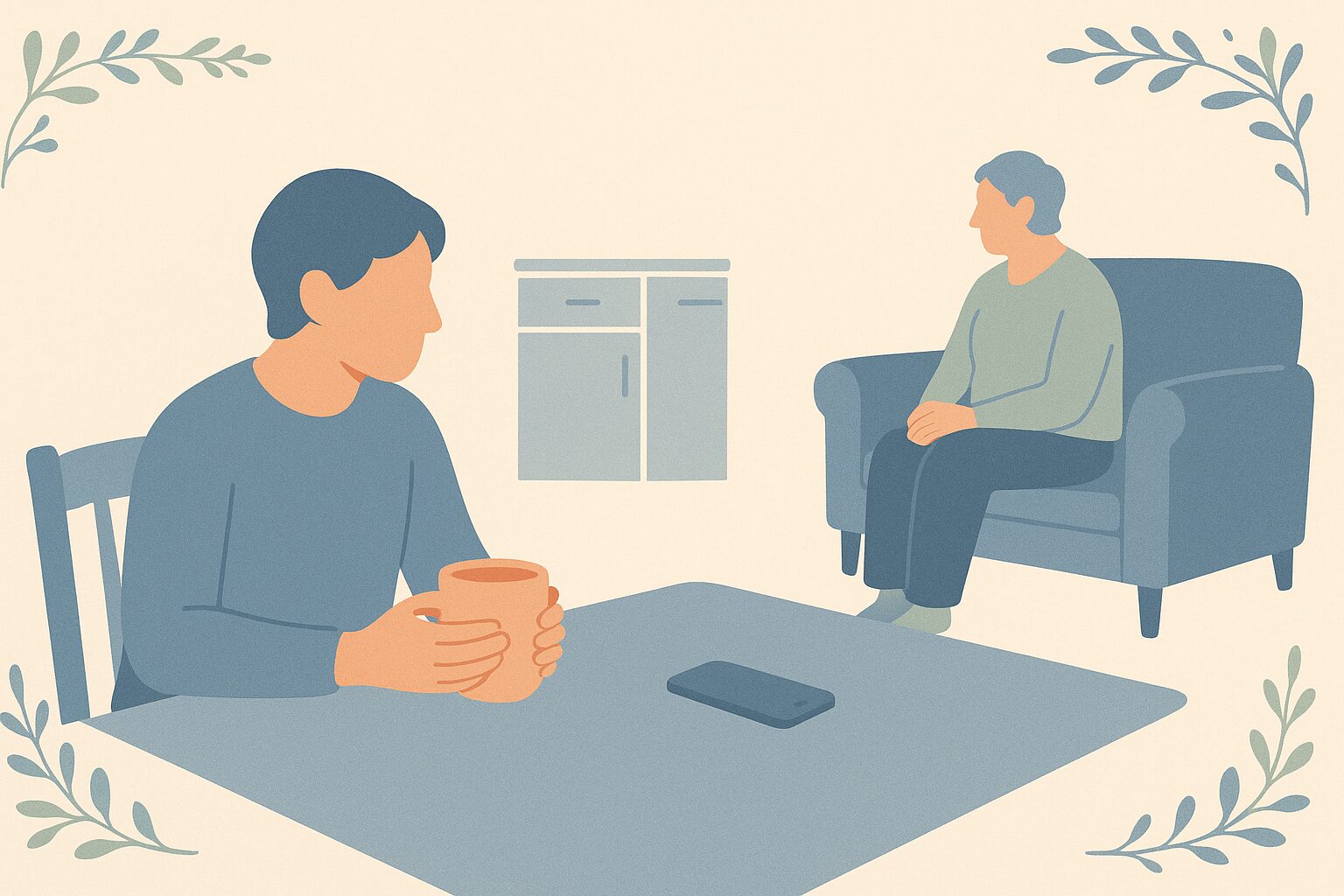
There is a particular kind of quiet that settles over a caregiver, and you know it even if you have never said it out loud. The house can be full. Your phone can be ringing. Someone you love is sitting three feet away from you. And still, underneath all of it, you feel completely alone. If you have wondered whether something is wrong with you for feeling this isolated while surrounded by people, let me say this plainly: there is nothing wrong with you. You are responding exactly the way a human being responds to a situation almost no one around you understands.
I am Jessica Lizel Cannon. I am a CPA and a Certified Dementia Practitioner, and I cared for my own mother through frontotemporal dementia, four misdiagnoses, and more than fifteen years. I want to be honest with you, because I think honesty is the only thing that actually helps here. I felt that loneliness too. I felt it in waiting rooms and in my own kitchen and in rooms full of people who loved me and had no idea what I was carrying. So when I write about this, I am not writing from a textbook. I am writing from the chair next to yours.
This is not a piece about fixing yourself, because you are not broken. It is a piece about naming what is happening, so the loneliness has less power over you, and about a few real, unglamorous ways back toward connection and back toward the person you still are underneath the role.
Key Insights
- Caregiver loneliness is common, not a character flaw. Nearly 1 in 4 family caregivers report feeling socially isolated, and that number is rising.
- Friends often drift not because they stopped caring, but because they do not know what to say or do, and the silence reads as abandonment.
- Grieving someone who is still alive has a name. Researchers call it ambiguous loss, and it is one of the hardest forms of grief precisely because it has no ending and no permission.
- The way back is not a grand gesture. It is small, repeated acts of letting one person see the real weight you are carrying.
Keep reading for the full picture below.
Table of Contents
- The Loneliness No One Warns You About
- Why People Drift, and Why It Is Not Your Fault
- Grieving Someone Who Is Still Here
- Small Ways Back to Yourself and to Others
- Frequently Asked Questions
- Citations
The Loneliness No One Warns You About
When you became a caregiver, someone probably warned you about the exhaustion. Maybe someone mentioned the paperwork, or the cost, or the sleepless nights. What almost no one tells you is that the loneliest part is not being physically by yourself. It is being in a room with other people and realizing that none of them can reach where you actually live now.
A great deal of caregiving is invisible. The mental load you carry, the constant low hum of tracking medications, watching for changes, anticipating the next crisis, rehearsing the next hard conversation, is real labor, and it never clocks out. But it does not show on the outside. People see you standing in the grocery store and assume you are fine, because you are dressed and upright and answering their questions. They cannot see that part of you is still back home, still on call, still doing math no one else knows you are doing.
That invisibility is its own kind of isolation. You are not alone in the literal sense. You are alone in the sense that the truest part of your day is happening where no one can witness it. And you are not imagining the scale of it. The Caregiving in the U.S. 2025 report from AARP and the National Alliance for Caregiving found that nearly 1 in 4 family caregivers feel socially isolated, and that the number is growing as more people step into this role. Whatever you are feeling, you are feeling it alongside tens of millions of other people who would recognize it instantly.
Why People Drift, and Why It Is Not Your Fault
One of the most painful parts of this season is watching friends slowly disappear. The calls get shorter. The invitations stop. The person who used to text you every week goes quiet, and you are left wondering what you did, or whether you were ever as close as you thought.
I want to offer you a different reading of it, because I think it is closer to the truth. Most people do not drift because they stopped caring about you. They drift because they do not know what to say, and the not knowing makes them freeze. Your life now contains things they find frightening: illness, decline, mortality, the loss of someone in slow motion. Faced with all of that, a lot of people simply go silent, not out of cruelty, but out of helplessness. From the inside, though, that silence is indistinguishable from being left behind.
It can also be true that you pulled inward without quite deciding to. When you are this depleted, keeping up a friendship can feel like one more task you do not have the energy for, so you let it lapse, and then the distance grows on both sides. None of that makes you a bad friend. It makes you a person running on empty who had to triage. Naming that honestly takes some of the shame out of it.
- The friend who went quiet may be waiting for a signal that it is okay to come back. A short, specific message reopens more doors than you would expect.
- People often want to help and have no idea how. A concrete ask, like a phone call on Thursdays or a meal dropped off, is far easier for them to say yes to than a vague offer.
- It is fair to grieve the friendships that did not survive this. Not everyone will rise to it, and that is a statement about their limits, not your worth.
Grieving Someone Who Is Still Here
There is a grief that has no funeral and no casserole and no card in the mail. It is the grief of losing someone who is still sitting right in front of you. With dementia especially, you can lose a person long before you lose them, watching the parent or partner you knew slip out of reach a piece at a time, while their body stays. You miss them and they are not gone. You mourn them and feel guilty for mourning someone who is still alive.
This experience has a name, and learning it helped me more than I can say. The researcher Pauline Boss calls it ambiguous loss: a loss without closure, without finality, without the social permission that a clear death would grant you. Her work describes the specific ache of loving someone who is here physically but gone mentally and emotionally, the person who is present and absent at the same time. Knowing that this was a recognized form of grief, and not a sign that I was ungrateful or coming apart, changed how I carried it.
Part of what makes this kind of grief so isolating is that the world does not acknowledge it. There is no obvious moment where people gather around you and say, this is hard, we see it. Boss suggests something she calls both/and thinking, the practice of letting two true things sit side by side without forcing them to resolve. You can love your person and grieve them. You can wish this season were over and want them to keep living. You are not contradicting yourself when you feel both. You are telling the truth about an impossible situation.
Small Ways Back to Yourself and to Others
I am not going to hand you a checklist of habits and tell you the loneliness will lift if you follow them. That would be dishonest, and you have had enough of being managed. What I can tell you is what actually moved the needle for me and for the families I have walked alongside since. It was never one big thing. It was small, repeated choices to let myself be seen.
The deepest loneliness in caregiving comes from being unwitnessed, from carrying a reality no one around you knows the shape of. So the way back is not necessarily more people. It is letting one person see the real weight, not the cleaned-up version. One friend who knows the actual hard parts is worth more than a room of acquaintances who only get the brave face.
It also matters that you stay connected to the person you are underneath the role. You are not only a caregiver. You were a whole person before this, with opinions and tastes and a sense of humor and things you loved that had nothing to do with anyone’s care. Those parts of you are not gone. They are quiet, because you have not had the room. Giving them even a few minutes is not selfish. It is how you stay yourself.
- Tell one trusted person the unedited truth this week. Not so they can fix it, but so you are no longer the only one holding it.
- Find the people who already understand. A caregiver group, online or in person, removes the exhausting work of explaining, because everyone there already speaks the language.
- Protect one small thing that is only yours: a walk, a book, a few pages of writing, a song you used to love. Reconnecting to yourself is part of reconnecting to anyone else.
- Let the imperfect version of connection count. A two-line text, a five-minute call, a wave to a neighbor. Depleted connection is still connection.
If you take nothing else from this, take this: the loneliness you feel is not evidence that you are failing at caregiving or at life. It is evidence that you are carrying something heavy in a world that mostly looks away from it. You do not have to carry it perfectly, and you do not have to carry it without being seen. After fifteen years in this with my own mother, the thing I most wish someone had told me sooner is that reaching for one honest connection is not weakness. It is how you survive this with your heart intact.
For more on caring for yourself while you care for someone else, visit our story and approach to see how the proactive path is built around the caregiver, not just the diagnosis.
Frequently Asked Questions
Q: Why do I feel so lonely when I am almost never actually alone?
A: Because caregiving loneliness is about being unwitnessed, not unaccompanied. The hardest part of your day, the mental load and the constant vigilance, is invisible to the people around you, so you can be surrounded and still feel that no one reaches where you actually live now. That feeling is one of the most common experiences in caregiving, not a sign that something is wrong with you.
Q: Is it normal for friends to disappear when you become a caregiver?
A: It is extremely common. Many friends drift not because they stopped caring, but because they do not know what to say in the face of illness and decline, so they go quiet. From the inside that silence feels like abandonment, but it is usually helplessness. A short, specific message or a concrete ask reopens more of those doors than people expect.
Q: Why do I feel like I am grieving someone who is still alive?
A: Because you are, and there is a name for it. Researcher Pauline Boss calls it ambiguous loss: grieving someone who is physically present but emotionally or mentally gone, as often happens with dementia. It is a real and recognized form of grief, made harder because it has no closure and little social acknowledgment. Feeling it does not mean you are ungrateful or coming apart.
Q: What actually helps with caregiver loneliness?
A: Less than you might think, and more honest than you might expect. The biggest shift is letting one trusted person see the unedited truth of your days, rather than the brave version. Adding a caregiver community removes the work of explaining, and protecting one small thing that is only yours keeps you connected to who you are underneath the role. Small, repeated connection beats one grand fix.
Want to Learn More?
The Proactive Caregiver was built from 28 years of CPA financial discipline, Certified Dementia Practitioner training, and more than 15 years caring for my own mother through frontotemporal dementia. Across 470-plus videos, 110-plus podcast episodes, and a book on proactive caregiving, the goal is always the same: help caregivers feel less alone, more prepared, and more themselves, instead of disappearing into the role.
Citations
- “New Report Reveals Crisis Point for America’s 63 Million Family Caregivers, AARP” — Announces the Caregiving in the U.S. 2025 report and its finding that nearly 1 in 4 family caregivers feel socially isolated, a number that is growing. https://www.aarp.org/press/releases/2025-07-24-new-report-reveals-crisis-point-for-americas-63-million-family-caregivers
- “Caregiving and Ambiguous Loss, Family Caregiver Alliance” — Explains Pauline Boss’s concept of ambiguous loss in dementia caregiving: grieving a person who is here physically but gone mentally, and the both/and thinking that helps caregivers hold contradictory feelings. https://www.caregiver.org/resource/caregiving-and-ambiguous-loss/
If feelings of isolation, hopelessness, or grief become overwhelming, please reach out to a doctor, a licensed mental health professional, or a trusted support line. You do not have to carry this alone, and asking for help is a sign of strength, not failure.
If you’d like to learn more, visit https://proactivecaregiver.com/discovery-call/ to talk through where you are and what would actually help.
Related Resources
Wherever you live, the proactive approach is the same. The Proactive Caregiver works with families nationwide through virtual coaching, with in-person roots in Austin and Central Texas.
Protect Your Family’s Financial Future
15 minutes. No pitch. Just clarity on where your family stands financially — and what to do next.
91%
Quality Verified
This content scored 91% in the Probably Genius Publication Readiness Assessment, meeting standards for direct answers, section depth, proof points, citation quality, and AI extractability.