When one sibling does all the dementia care, most of it can move. How roles shift by capacity, not guilt, and why a parent’s capacity sets the deadline.
Continue reading...
How Do I Stay Myself When Everyone Needs Me?
By: Jessica Cannon
June 22, 2026
Answering: How Do I Stay Myself When Everyone Needs Me?
Estimated reading time: 8 min read
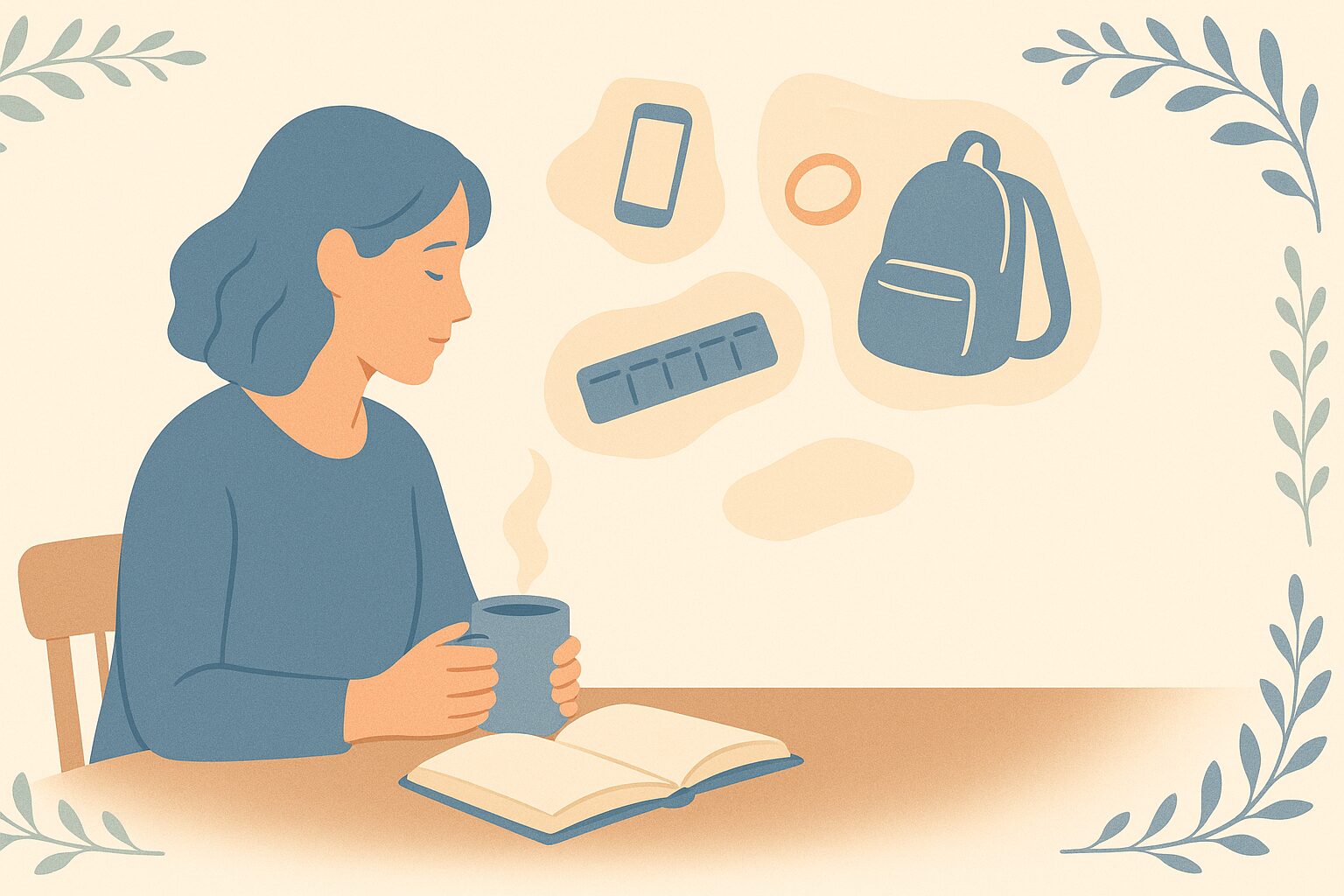
There is a particular kind of tired that has nothing to do with sleep. You feel it when someone asks how you are and you genuinely cannot find the answer, because the woman who used to have answers seems to have been handed out in pieces to everyone who needed her. You stay yourself by remembering that the self underneath all these roles is not gone. She is buried under other people’s needs, which is not the same thing as erased. You can reach her. It takes deciding she is still worth reaching, and it takes refusing to wait until everyone else is fine first, because that day does not come.
I am Jessica Lizel Cannon, a Certified Dementia Practitioner and a CPA, and I cared for my own mother through frontotemporal dementia and four misdiagnoses for more than 15 years. I am not writing this from a comfortable distance. I have stood in a hallway and not recognized my own face in a darkened window, and I have felt the specific shame of resenting people I love. So when I say you can stay yourself, I do not mean it as a slogan. I mean it the way you mean something you had to claw back personally.
If you are reading this at the end of a day where you were daughter, wife, and mother all at once and somehow none of it felt like enough, you are not failing at this. You are absorbing a load that was never meant to land on one person. Let me name what is actually happening, and then let me tell you what helped, honestly, without pretending it is simple.
Key Insights
- Disappearing into caregiving is not a character flaw. It is the predictable result of a load most families place on one person, usually a woman.
- Resentment is information, not evidence that you are a bad person. It usually marks the exact place a boundary is missing.
- You do not have to do every role beautifully. Letting some be merely good enough is how you keep the strength for the ones that matter most.
- There is a real difference between disappearing by default and choosing what you give. The second one is how you stay whole.
Keep reading for the full picture below.
Table of Contents
- When You Start to Disappear
- Why It All Lands on You
- The Quiet Grief of Losing Yourself
- How to Stay Whole Without Abandoning Anyone
- Frequently Asked Questions
- Citations
When You Start to Disappear
It does not happen in one dramatic moment. It happens in small surrenders that each seemed reasonable at the time. You stop reading because the book sits on the nightstand for three weeks and you feel guilty looking at it. You stop calling the friend who needs a real hour of your attention, so eventually she stops calling too. You answer to “Mom” and to your own mother’s name and to your married name, and one day you realize no one in your house has said your first name out loud in a while. That is the moment a lot of women describe to me. Not a breakdown. A quiet recognition that you have become a function instead of a person.
The roles do not feel separate from inside them. They feel like one undifferentiated obligation that follows you from room to room. You are checking your mother’s medication while answering your teenager’s text while your husband mentions, not unkindly, that you have not really talked in weeks. Each person is asking for something fair. The problem is not any single request. The problem is that they arrive at the same address, and that address is you.
Naming this matters, because what you call a thing changes how you treat it. If you call it a personal weakness, you will try to fix it by trying harder, which only deepens the hole. If you call it what it is, a load distributed badly, you can start asking a different question. Not “why can’t I keep up,” but “who else belongs in this, and what am I allowed to set down.”
Why It All Lands on You
Family care in this country runs on unpaid labor, and an enormous amount of it. The AARP and National Alliance for Caregiving research estimates that more than one in five American adults, roughly 53 million people, provide unpaid care to an adult or child, and the majority of those caregivers are women. Inside a single family, that load almost never splits evenly. It collects on one person, and that person is usually a daughter.
There is a reason it lands on you, and it is worth saying out loud because it removes some self-blame. You are the one who notices. You saw the unpaid bill, the weight loss, the new confusion on the phone, before anyone else did. The person who notices first becomes the person who acts, the person who acts becomes the default, and the default quietly becomes permanent. Competence is its own trap. The better you handle it, the less anyone else feels they need to step in.
Then there are the siblings. The ones who live far away, or who are “not good with this stuff,” or who genuinely believe you have it handled because you have never once said otherwise. I want to be careful here, because the resentment that builds toward siblings is real and it is also rarely the whole story. Sometimes people do not show up because they were never clearly asked. Sometimes they were asked and chose not to, and that is its own grief you will have to feel separately. Either way, you cannot make another adult care the way you wish they would. You can only stop covering for the gap so completely that no one else ever notices it is there.
And there is your husband, who feels like he came second and is sometimes right. That is not a betrayal of him or of your parent. It is a sign that you are being asked to be fully present in more places than a person can physically occupy. Marriages strain under caregiving not because the love left, but because the time and attention that fed the marriage got reassigned without anyone deciding to do it on purpose.
The Quiet Grief of Losing Yourself
There is a grief here that does not get a casserole or a sympathy card, because no one has died. The therapist and researcher Pauline Boss named this experience ambiguous loss, the particular pain of loving someone who is here physically but slipping away in the ways that made them themselves. With dementia, you grieve your mother while she is still at the table. The Family Caregiver Alliance, drawing on Boss’s work, makes a point I return to often: with this kind of loss, the hardest part is frequently not the illness itself but the not-knowing that surrounds it, the absence of any clean line that tells you when to mourn.
What gets talked about less is the second loss layered underneath that one. While you are grieving the parent who is fading, you are also quietly grieving yourself. The woman who had opinions about things other than care schedules. The one who laughed easily, who had a project, who could sit through a meal without scanning for the next emergency. That version of you is not dead either. But she is hard to find under everyone’s needs, and missing her can feel selfish to admit, which is exactly why it festers in silence.
I want to say the thing nobody says clearly enough. Resentment does not mean you love your mother less or your family less. Resentment is usually just information. It tends to show up at the precise location where a boundary should be and is not. When I felt it rising in me, the most useful thing I ever did was stop treating it as proof of a defective heart and start treating it as a map. It was pointing at something I had given that I should have shared, or given without ever being asked, or given because I assumed no one else would. Shame buries that signal. Honesty reads it.
How to Stay Whole Without Abandoning Anyone
Staying yourself is not a spa day. It is not a weekend that fixes everything and then you return to the same impossible arrangement. It is smaller and more stubborn than that. It is a series of tiny refusals to vanish completely, repeated often enough that the self underneath stays warm. Here is what actually held me together, offered plainly.
- Keep one thread that is only yours. Not a wellness routine. One ordinary thing that belongs to no one else: the ten pages you read, the early coffee in silence, the walk you take alone. It does not have to be productive. It has to be yours, and it has to be defended like it matters, because it does.
- Say the resentment out loud to one safe person. Not to wound anyone, but to let it out of the dark where it grows. Spoken honestly, it shrinks back to its real size, which is usually a boundary you are allowed to set.
- Let some roles be good enough. You cannot be an excellent daughter, wife, and mother all in the same exhausted day. Choose where merely good enough is genuinely fine this week, so you keep the strength for the place it is not.
- Ask plainly, even if the answer is no. Tell a sibling the specific thing you need, once, clearly, in writing if you have to. Their refusal is theirs to carry. Your silence is the only part you control, and silence guarantees the gap stays yours.
Underneath all of those is one distinction that changed how I carried this. There is a difference between disappearing and choosing. Disappearing is what happens by default, when you give everything to whoever is loudest in the moment until nothing is left for the person doing the giving. Choosing is deciding, on purpose and with open eyes, what you will give and what you will not. The acts can look identical from the outside. You may still be at your mother’s side for hours. But one version slowly erases you, and the other lets you stay a whole person while you do hard and loving work. The hours are not the enemy. Doing them on autopilot, with no part of yourself held back as your own, is what hollows you out.
You are allowed to be a person who is more than useful. Your worth was never a tally of how much you provided to others. After everything I went through with my mother, the families I see come out the other side intact are not the ones who sacrificed the most completely. They are the ones who kept one hand on themselves the whole way through, who let go of the impossible standard of perfect in four directions at once, and who decided, out loud, who they were going to keep being.
Frequently Asked Questions
Q: Is it normal to feel resentment toward the people I’m caring for?
A: Yes, and it does not make you a bad daughter, wife, or mother. Resentment is usually information rather than a character flaw. It tends to appear exactly where a boundary is missing or where you are carrying something that was never fairly yours alone. The healthiest thing you can do is name it honestly to one safe person instead of burying it in shame, because spoken aloud it usually points you toward what actually needs to change.
Q: How do I keep my sense of self when every role needs me at once?
A: You protect small, ordinary acts of identity that belong only to you, and you do it consistently rather than waiting for a big break that never comes. Keep one thread that is yours alone, let some roles be merely good enough instead of excellent, and decide on purpose what you will and will not give. Staying yourself is not one grand gesture. It is many small refusals to vanish completely.
Q: Why does the caregiving always seem to fall on me?
A: Usually because you are the one who noticed first. The person who sees the decline becomes the person who acts, the default forms quietly, and competence makes it permanent, because the better you handle it the less anyone else feels they must step in. Naming this helps, because it shifts the question from “why can’t I keep up” to “who else belongs in this, and what am I allowed to set down.”
Q: My husband feels like he comes second. Does that mean I’m doing this wrong?
A: No. It usually means you are being asked to be fully present in more places than one person can physically occupy. Marriages strain under caregiving not because the love disappeared but because the time and attention that fed the marriage got reassigned without anyone deciding to on purpose. The repair is not doing more. It is choosing, deliberately, to protect a little of what the marriage needs instead of letting it be the thing that quietly gives way.
Want to Learn More?
The Proactive Caregiver was built from years of CPA financial discipline, Certified Dementia Practitioner training, and more than 15 years caring for my own mother. Across 470-plus videos, 110-plus podcast episodes, and a book on proactive caregiving, the goal is the same: help you stay aware, prepared, and whole, so the system and the demands do not get to decide who you are.
Citations
- “Caregiving in the United States 2020, AARP and National Alliance for Caregiving” — Source for the estimate that more than one in five US adults, roughly 53 million people, provide unpaid care, and that the majority of caregivers are women. https://www.aarp.org/pri/topics/ltss/family-caregiving/caregiving-in-the-united-states/
- “Caregiving and Ambiguous Loss, Family Caregiver Alliance” — Explains Pauline Boss’s concept of ambiguous loss in dementia caregiving, including that the hardest part is often the ongoing uncertainty rather than the illness itself. https://www.caregiver.org/resource/caregiving-and-ambiguous-loss/
If you’d like to learn more, visit https://proactivecaregiver.com/discovery-call/ to talk through what staying yourself can look like in the middle of caring for everyone else.
Related Resources
Wherever you live, the proactive approach is the same. The Proactive Caregiver works with families nationwide through virtual coaching, with in-person roots in Austin and Central Texas.
Protect Your Family’s Financial Future
15 minutes. No pitch. Just clarity on where your family stands financially — and what to do next.
91%
Quality Verified
This content scored 91% in the Probably Genius Publication Readiness Assessment, meeting standards for direct answers, section depth, proof points, citation quality, and AI extractability.