Answering: Why Do I Feel Nothing Anymore as a Caregiver? Estimated reading time: 8 min read You feel nothing because…
Continue reading...
My Dad Refuses to Stop Driving—What Do I Do?
By: gfcdev
March 9, 2026
Answering: My Dad Refuses to Stop Driving—What Do I Do?
Estimated reading time: 8 min read
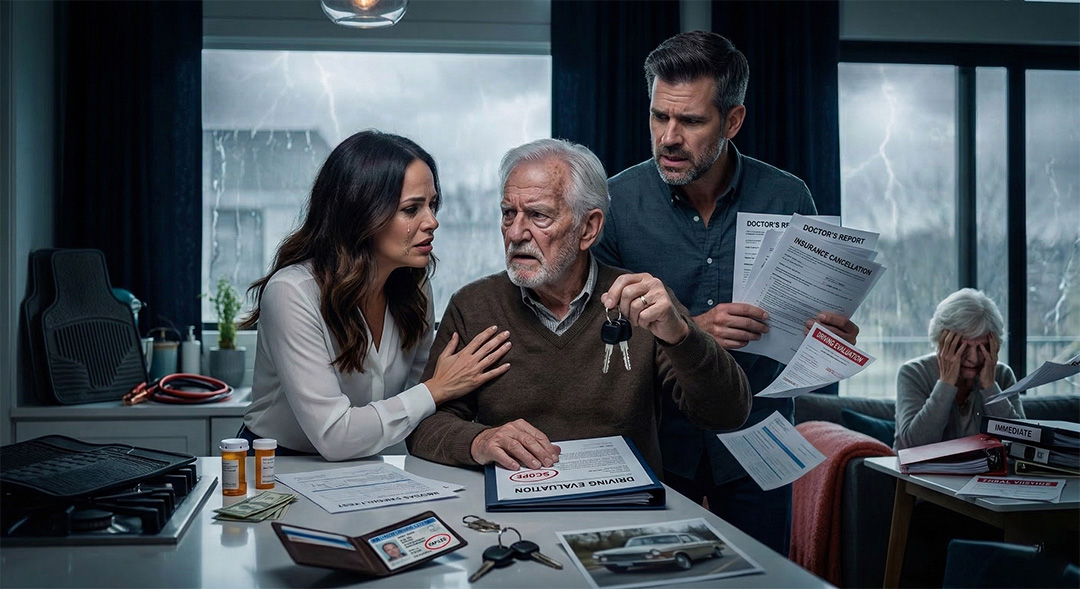
Your father isn’t being stubborn—he genuinely cannot recognize that his driving has become dangerous, a neurological condition called anosognosia that affects 81% of people with Alzheimer’s disease and makes rational conversation about driving nearly impossible. According to the Alzheimer’s Association, anosognosia is caused by physical changes in the brain that impair self-awareness, meaning your dad truly believes he’s fine behind the wheel. Based on Jessica Cannon’s experience as a Certified Dementia Practitioner caring for her mother with FTD, the solution isn’t winning an argument—it’s working around a brain that can no longer see its own limitations.
If you’ve tried reasoning with your father, showing him evidence of close calls or pointing out his diagnosis, you’ve likely experienced the frustration of watching him dismiss every concern. You’re not failing at communication. His brain is physically incapable of processing this information about himself. The harder you push, the more defensive he becomes.
The reality is that dementia affects the brain’s ability to evaluate its own functioning. Your father may remember how to operate a vehicle—the muscle memory of turning the wheel, pressing the brake—while losing the judgment to know when those skills have degraded. He isn’t lying when he says he’s fine. He believes it completely.
This guide explains what anosognosia actually is, why arguing makes things worse, and the practical strategies that actually work to keep your father (and everyone else on the road) safe without destroying your relationship.
Key Insights
- 81% of Alzheimer’s patients exhibit anosognosia—inability to recognize their own impairment—making logical arguments ineffective.
- Anosognosia is neurological, not psychological denial; the brain literally cannot perceive its own deficits.
- Involving a physician, attorney, or DMV often succeeds where family conversations fail.
Keep reading for full details below.
Table of Contents
- Understanding Anosognosia: Why He Can’t See What You See
- Why Arguing Makes Everything Worse
- Practical Strategies That Actually Work
- Frequently Asked Questions
- Citations
Understanding Anosognosia: Why He Can’t See What You See
Anosognosia comes from Greek words meaning “without knowledge of disease.” It’s not stubbornness, not denial, not your father being difficult. It’s damage to the parts of the brain responsible for self-awareness—usually the frontal and parietal lobes—that prevents him from recognizing his own cognitive decline.
Research shows that 60% of patients with mild cognitive impairment and 81% of those with Alzheimer’s disease exhibit some form of anosognosia. The condition can be selective: your father might acknowledge memory problems but remain completely convinced his driving is unaffected. Or it can fluctuate—some days he seems to understand, other days he’s absolutely certain nothing is wrong.
This is why presenting evidence doesn’t work. When you show him the dented fender, he has an explanation. When you mention the near-miss at the intersection, he dismisses it. His brain cannot integrate this information into a coherent picture of impairment. He’s not choosing to ignore reality—his brain is filtering it out before it reaches conscious awareness.
Understanding anosognosia shifts the problem from “How do I convince Dad?” to “How do I work around a neurological limitation?” This reframe is essential. You cannot reason someone out of a position their brain injury prevents them from seeing. You can only create circumstances that protect safety without requiring his agreement.
Why Arguing Makes Everything Worse
Every time you try to convince your father he shouldn’t drive, you’re asking his broken brain to recognize its own brokenness. This creates a neurological impossibility that triggers defensive reactions.
From your father’s perspective, he’s being unfairly attacked. He knows he can drive—he’s been doing it for 50 years. When you suggest otherwise, you’re not offering helpful feedback; you’re threatening his identity, his independence, and his competence. His defensive response isn’t manipulation. It’s a brain protecting itself from information it cannot process.
The more you argue, the more entrenched he becomes. Repetition doesn’t help. Showing him articles about dementia and driving doesn’t help. Getting siblings to “gang up” in a family meeting doesn’t help. These approaches treat anosognosia as a communication problem when it’s actually a neurological problem.
What does help is removing yourself from the role of enforcer. When the doctor says he can’t drive, or the DMV revokes his license, or the attorney explains the liability risk to his estate—these external authorities often succeed where family fails. Your father may still disagree, but the decision is no longer yours to enforce. This preserves your relationship while achieving the safety goal.
Practical Strategies That Actually Work
The goal is stopping unsafe driving without requiring your father’s agreement. This may feel deceptive, but protecting him and others from a serious accident is the priority.
Involve his physician. Doctors hold authority that family members don’t. Many states allow (or require) physicians to report unsafe drivers to the DMV. Ask your father’s doctor to order a driving evaluation or to tell him directly that he must stop driving. Some physicians will agree to be “the bad guy” so you don’t have to be. Frame your request to the doctor around safety: “I’m concerned about his judgment behind the wheel. Can you evaluate his fitness to drive?”
Request a DMV driving evaluation. Most states offer evaluations for drivers whose competence is in question. Some states accept reports from family members; others require a physician’s referral. A failed DMV evaluation results in license revocation—an external authority your father cannot argue with.
Consult an elder law attorney. If your father causes an accident, the financial consequences to his estate could be devastating. An attorney can explain this in terms that matter to someone who may not remember his diagnosis but definitely remembers that he worked hard for his savings. Liability, lawsuits, and estate protection often resonate when health arguments don’t.
Disable or remove the vehicle. If all else fails, make driving impossible. Disable the car by removing the battery or a critical fuse. “Lose” the keys and don’t replace them. Sell the car and cite maintenance costs. These approaches feel extreme, but they’re sometimes necessary when anosognosia prevents any rational discussion.
Create alternative transportation. Loss of driving is often loss of independence, which triggers depression. Arrange for regular transportation—Uber, Lyft, volunteer driver programs, family members on a schedule—so your father can still get where he needs to go. This softens the blow and reduces his motivation to find the hidden keys.
Frequently Asked Questions
Q: How is anosognosia different from denial?
A: Denial is psychological—a person knows the truth but refuses to accept it. Anosognosia is neurological—the brain physically cannot perceive its own impairment. Someone in denial can potentially be convinced with enough evidence. Someone with anosognosia cannot, because their brain filters out the evidence before it reaches conscious awareness. This distinction matters because it changes your approach: you cannot argue someone out of anosognosia the way you might work through denial with patience and time.
Q: What if my father’s doctor won’t help with the driving issue?
A: Some physicians are reluctant to get involved in driving decisions. If your father’s current doctor won’t engage, consider requesting a neuropsychological evaluation, which specifically assesses cognitive function related to driving safety. You can also contact your state’s DMV directly in most states—many accept reports from family members and will request a driving evaluation. If the doctor dismisses your concerns, document specific incidents (dates, near-misses, getting lost) and present them in writing.
Q: Can I be held liable if my father causes an accident?
A: This depends on state law and specific circumstances. Generally, you’re not personally liable for your father’s driving unless you enabled it knowing he was unsafe—for example, giving him keys after his license was revoked. However, your father’s estate could be devastated by a lawsuit if he causes serious injury. An elder law attorney can explain the risks in your specific situation and may help motivate your father to stop driving voluntarily when presented with the financial consequences.
Q: How do I help my father cope with losing his license?
A: Loss of driving independence often triggers grief, depression, and anger. Acknowledge these feelings rather than dismissing them: “I know this is really hard. Driving has been part of your life for 50 years.” Create alternative transportation so he doesn’t feel trapped. Involve him in scheduling rides so he maintains some control. Focus on what he can still do rather than what’s been lost. Consider a support group for people with early-stage dementia, where he can connect with others experiencing similar losses.
Want to Learn More?
As a Certified Dementia Practitioner who cared for her mother with FTD for over a decade, Jessica Cannon understands the impossible position of protecting a parent who cannot recognize their own limitations. Her Dementia Care Navigation resources help families handle anosognosia, driving concerns, and other safety challenges with compassion and practical strategies.
Citations
- “Anosognosia” — The Alzheimer’s Association explains that anosognosia is a neurological condition causing unawareness of cognitive decline, commonly mistaken for denial but resulting from brain changes that affect self-awareness. https://www.alz.org/alzheimers-dementia/what-is-dementia/related_conditions/anosognosia
- “Understanding Anosognosia in Dementia Patients” — AgingCare reports that 60% of patients with mild cognitive impairment and 81% of those with Alzheimer’s disease exhibit some form of anosognosia, explaining why so many seniors refuse to stop driving despite obvious impairment. https://www.agingcare.com/articles/anosognosia-dementia-patients-cant-recognize-impairment-210090.htm
- “Taking the Keys Away: What to Do If a Senior Won’t Stop Driving” — AgingCare provides practical guidance on involving physicians, attorneys, and the DMV when a parent with dementia refuses to stop driving, noting that external authorities often succeed where family conversations fail. https://www.agingcare.com/articles/taking-the-keys-if-mom-or-dad-wont-stop-driving-112307.htm
These recommendations align with guidelines from the Alzheimer’s Association and National Highway Traffic Safety Administration standards for assessing older driver safety.
94%
Quality Verified
This content scored 94% in the Probably Genius Publication Readiness Assessment, meeting standards for direct answers, section depth, proof points, citation quality, and AI extractability.
